


Know what’s inside!
AI-Based Analysis of Mineral Construction Waste
Mineral construction waste is the largest waste stream by volume—yet it is also one of the least transparent. In Germany alone, around 200 million tonnes of construction rubble are generated every year. In practice, however, it is often not sufficiently traceable on a data basis which material qualities are actually present in the stream, how contaminant shares develop, or how robust the basis is for classification, recovery routes, pricing, and verification. Missing or inconsistent quality data leads to friction losses along the entire process chain—from the jobsite to acceptance and processing.
As part of FACHTAGUNG ABBRUCH 2026, Hannes Berteit, Head of Sales at Optocycle GmbH (Tübingen), explained in his presentation how mineral material streams can be analyzed in a standardized, objective, and real-time manner using modern sensor technology and artificial intelligence.
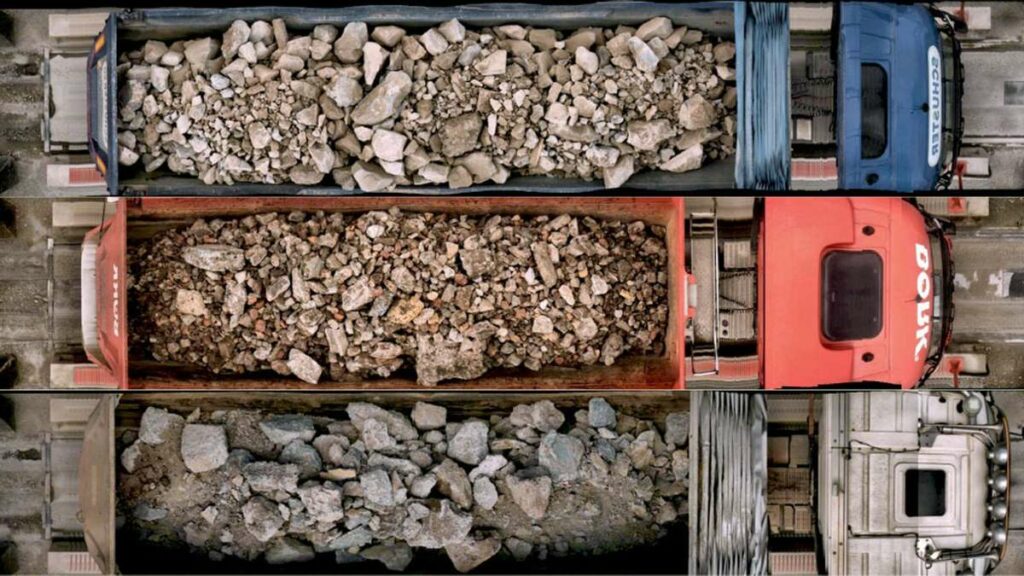
Technically, the approach is based on a combination of multispectral video capture and AI-supported evaluation. The solution continuously records the material stream and automatically converts raw data into actionable information. The focus is in particular on differentiating visually similar material fractions, precisely detecting impurities (e.g., wood content in concrete), and determining quantity-related key figures. The algorithms are designed to be self-learning and continuously improve accuracy through machine-learning mechanisms.
The hardware can be flexibly integrated into existing process environments and is designed for different points of application—from recording at delivery and unloading areas to conveyor-belt analysis. Depending on the setup, up to four cameras, NIR sensors, and integrated computing power are possible; additional modules such as activity detection, volume measurement, and license-plate capture can also be integrated.
The resulting data is consolidated centrally in Optocycle’s software. As a “single source of truth,” sensor data is archived, documented neutrally, and made usable via dashboards for automated real-time monitoring. This creates a robust data layer that supports quality assurance and material steering as well as documentation and compliance.
The presentation makes one thing clear: a functioning circular economy in the mineral sector requires not only processing technology, but above all reliable quality data. AI-based material analysis can be a decisive building block to assess material streams transparently, reduce conflicts, and steer high-quality fractions into recovery in a targeted way.
 Know what’s inside! (in German)
 Download