

The Art of the Perfect Blast
52 Weeks of Preparation for 29.5 Seconds of Precision
Germany’s energy transition is one of the largest and most demanding infrastructure challenges the country has faced in recent decades. Public attention in this transformation tends to focus on wind and solar power, as well as the transmission corridors needed to distribute renewable energy. What deserves far more attention, however, are the complex tasks involved in decommissioning fossil energy infrastructure and converting the associated sites. The dismantling of coal-fired power plants in particular is proving to be a fascinating field of work on an XXL scale – one that will keep ambitious engineers, technicians, and project managers busy for many years to come.
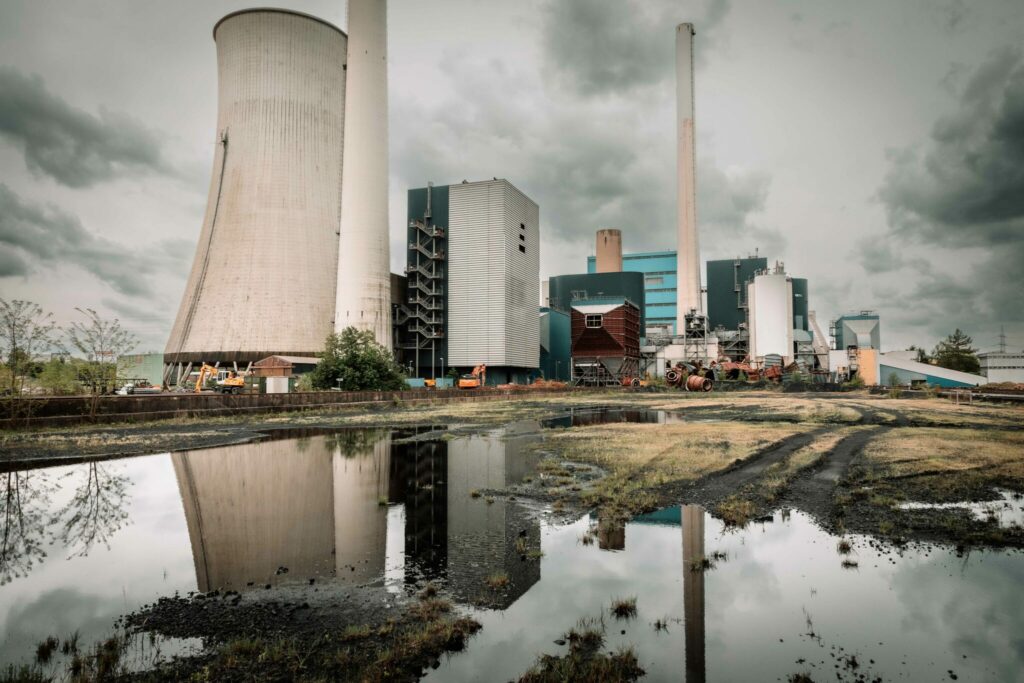
The conversion project at the coal-fired power plant in Ensdorf, Saarland, is a prime example of the interdisciplinary technical, organizational, and communication challenges required to plan and execute such projects safely, efficiently, and sustainably. On a site of around 600,000 m² southeast of Saarlouis, more than 1.5 million m³ of gross building volume must be professionally dismantled – including compliant and safe disposal of hazardous substances and maximum recycling rates in line with circular-economy principles.
Explosive Demolition Far Beyond Day-to-Day Business
That the work can also be spectacular is shown by Janina Frias (Arcadis Germany), Clarissa Rapps (Woelfel Group), and Michael Schneider (RL Liesegang Sprengtechnik) in their presentation on the blasting event on 30 June 2024. After 52 weeks of preparation, the plant’s two chimneys, the cooling tower, and the flue-gas denitrification unit were brought down within 29 seconds.
Even for professionals in “explosive” demolition, the technical and organizational conditions went far beyond the average demands of their day-to-day work. The large number of decision-makers, experts, and affected stakeholders involved made focused cooperation and communication the top critical success factor. All of this was only possible through close collaboration – both on the client side, VSE AG, and among the contracted companies responsible for the engineering planning and execution of the measure.
The joint effort (and the well-coordinated, carefully choreographed use of 112 kilograms of explosives) paid off: the blast was carried out with the precision of proverbial Swiss clockwork, the schedule for the final dismantling phase and the site’s conversion is set, and after almost 12 months of preparation, a major milestone toward a future-ready transformation of the power plant site was achieved in Ensdorf in less than half a minute.
Janina Frias, Arcadis Germany; Clarissa Rapps, Woelfel Group; Michael Schneider, RL Liesegang Sprengtechnik