

AI-Supported Analysis Processes
New Approaches to Classifying Mineral Waste on the Jobsite
The waste-law classification of mineral waste is one of the central, yet also one of the most demanding tasks in demolition and construction projects. It determines early on which disposal routes are available, what costs arise, which liability issues may apply, and whether high-quality recovery is possible. In practice, however, this classification is still often carried out manually on the basis of heterogeneous test reports, scattered data sources, and the individual experience of specific specialists.
At the same time, the complexity of the applicable regulatory frameworks continues to increase. The Substitute Building Materials Ordinance, LAGA, the Landfill Ordinance, DIN standards, and numerous special provisions and footnotes all have to be taken into account and applied correctly. The growing shortage of skilled workers further intensifies this situation. Knowledge is often tied to individual people, decisions are documented only to a limited extent, and follow-up questions cost time on all sides.
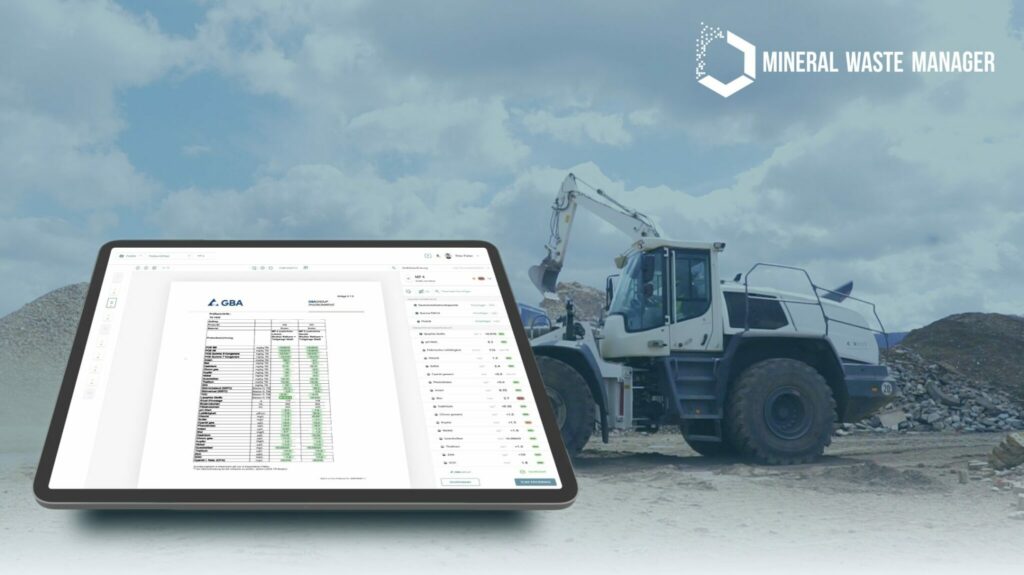
The presentation classifies these challenges from the perspective of Mineral Waste Manager GmbH. Founded in 2020, the tech start-up develops the Mineral Waste Manager, a digital and AI-based assistance system for the disposal of mineral waste. In the web application, test reports are read automatically, waste is classified, and materials are categorized according to the applicable requirements, taking current regulations and state-specific rules into account.
The focus of the presentation is not on the digitalization of individual documents, but on supporting waste-law decision-making. The decisive bottleneck is often not a lack of data, but the expert evaluation and classification of that data. This is where conventional digitalization reaches its limits if decision logic is not systematically supported.
AI-supported analysis processes address exactly this point: they automatically structure and verify laboratory analyses, compare measured values with the relevant regulatory frameworks, and take project-specific special provisions into account. The approach does not think in isolated individual values, but in practical terms of stockpiles and real material flows as they actually occur on construction sites.
The result is transparent, regulation-compliant, and traceably documented classifications that provide a reliable basis for further decisions. By reducing manual review steps, throughput times can be shortened, duplicate work avoided, and misclassifications identified at an early stage. At the same time, decision-making knowledge becomes available within the company and is documented in a traceable way.
The contribution shows why the key to greater efficiency and legal certainty in mineral waste management lies not only in the digitalization of processes, but in the intelligent support of complex decisions — and what role AI-based analysis approaches may play in the future.