Dear Sir or Madam, dear readers,
last week, we focused on the EBV amendment — a topic that may sound highly technical at first glance. In reality, it is a crucial yardstick for whether the transition in the construction sector can succeed at all. Because a circular economy in construction doesn’t come from targets and good intentions, but from rules that work in practice: clear requirements, less bureaucracy, and real legal certainty for recycled construction materials.
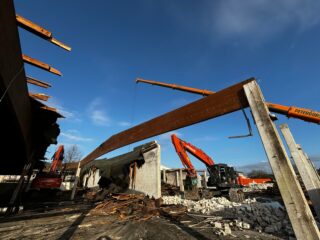
That is why this week we are looking at the bigger picture: the construction transition. And here, too, the same applies: anyone who only talks about new builds, timber, and energy is missing the point. Transformation begins where existing structures are assessed, selectively dismantled, and resources are secured — in the “urban mine.” This is exactly where the demolition industry is not a side note, but the starting point.
We secure materials, separate them, test them, process them — and feed them back into the cycle with assured quality. This is not a “waste issue,” but the resource lever for less virgin material, lower CO₂ emissions, and more regional value creation. No dismantling, no circular economy. And no circular economy, no construction transition.
How practical, innovative, and capable the industry is can also be seen in the presentations at FACHTAGUNG ABBRUCH — where the construction transition isn’t just discussed, but demonstrated through real projects.
And one more update on the exhibition: four additional exhibitors have confirmed. That means STATION Berlin is now fully booked with 125 exhibitors across 1,208 m².
We wish you an enjoyable read.
Your DA Team