


Small Bricks with a Past as Building Materials with a Bright Future
Returning reclaimed clinker bricks to the building material cycle
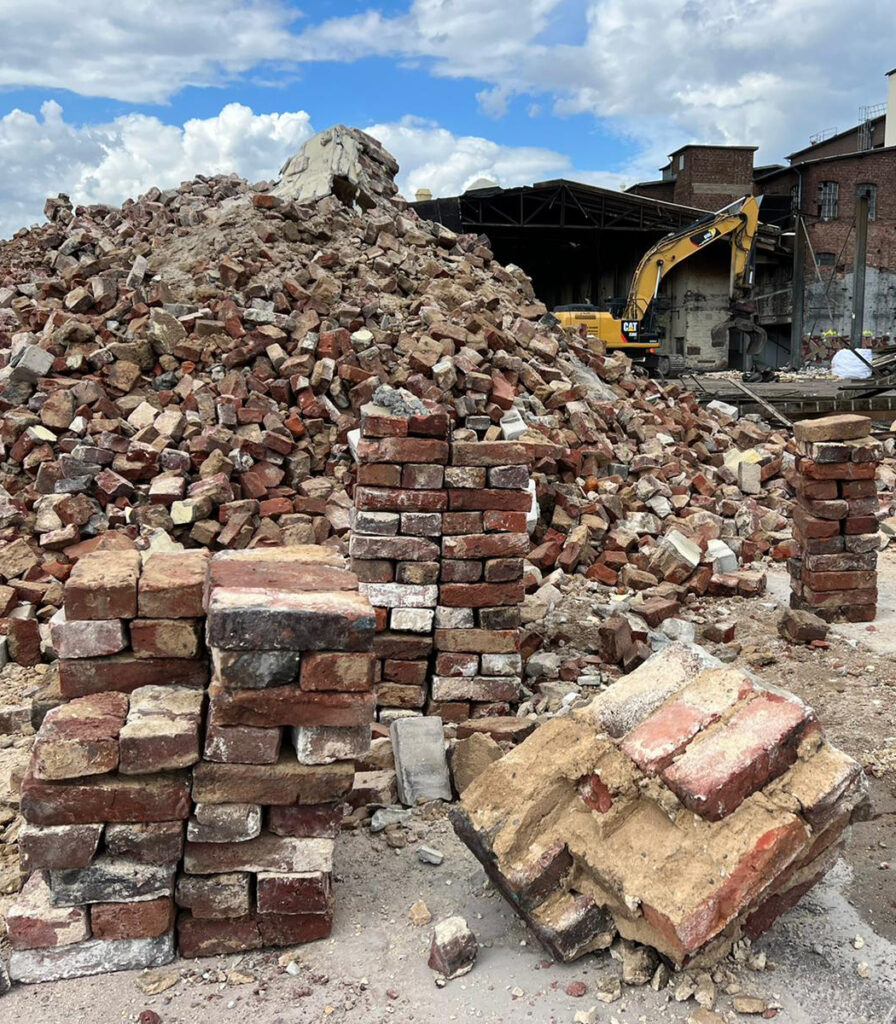
Selective dismantling opens up new opportunities for the reuse of mineral-based construction materials. One example is Klinker Historika GmbH, a company operating in Germany and the Netherlands that specialises in the recovery, processing and marketing of historic clinker bricks. Its work focuses on cooperating with demolition contractors during dismantling and demolition projects. The aim is not to treat clinker masonry as demolition waste, but to recover it as a reusable construction material and return it to the material cycle.
Suitable clinker façades are identified either before or during dismantling, carefully exposed and separated from the rest of the building structure. Recovering the material in as pure and unmixed a form as possible is crucial, allowing the bricks to be salvaged separately from other construction materials and prepared for further use. The clinker bricks are then cleaned, inspected, sorted and placed on pallets. Depending on their quality and intended use, they are subsequently stored or processed further. Some of the recovered bricks are reused directly as construction materials, while others are processed into products such as brick slips, paving bricks or façade elements. Material that can no longer be used as complete bricks can also be repurposed, for example as a component of substrates.
When working with demolition contractors, coordinating the processes on site is particularly important. This includes issues such as the provision of suitable working areas, temporary storage, logistics and the coordination of dismantling and material separation. In this way, dismantling processes and material reuse can be effectively combined.
Quality assurance is another important aspect. According to the company, the recovered clinker bricks undergo technical assessment as part of a suitability test. The company’s website also highlights its cooperation with testing bodies and the certification of its reused bricks.
From a resource conservation perspective, the process is particularly significant. Based on its Environmental Product Declaration for reused bricks, Klinker Historika reports a carbon footprint of 9.330 kilograms of CO₂ per tonne and 16.822 kilograms of CO₂ per cubic metre. Compared with the average carbon emissions generated by the production of new clinker bricks, this represents a reduction of more than 98 per cent. These figures are based on the EPD’s “cradle-to-gate” assessment, covering the production phase from dismantling or “harvesting” the bricks on site through to delivery to the customer.
The example of Klinker Historika therefore demonstrates the potential of selective dismantling when materials are identified at an early stage, separated from other materials and reused in high-quality applications.