DA Logo
  •   Login

Lost your password?
Generic filters
Exact matches only
Menu
  • Association
    • Association Profile
      • Profile and history of the association
      • Organisation Chart
      • Board of Directors
      • Offices
    • Members
      • Members Directory
      • Membership
    • Committees
      • Advisory Board
      • Regional Associations
      • Professional Committees
      • Working Groups
    • Partners
  • Professional Subjects
    • Demolition Technology
    • Safety and Health protection at the workplace
      • Hazard assessment
    • Law
    • Recycling and Waste Disposal
    • Pollutants
    • Education and Continuing Education / Career in the Demolition Industry
    • Social policy and Collective agreement
    • Blasting Technology
  • Publications
  • Seminars
  • Career
    • Education and Continuing Education / Career in the Demolition Industry
  • Press Area
    • Press Archive
    • Download Press Images
    • Press Contact
    • Association News
    • Member news
» Why is it still called “waste”? | DA Newsletter No. 18/2026

Why is it still called “waste”? | DA Newsletter No. 18/2026

Dear Sir or Madam, dear readers,

a new study on the circular economy commissioned by the BDI is currently attracting attention. Why? Because it sets an important tone by treating the circular economy not only as a climate or moral issue, but as a matter of industrial policy, raw material security, resilience, and competitiveness.

This is exactly the perspective we, as an industry, have been advocating for years.

But from the perspective of the German Demolition Association, the study falls short in key areas — at least when it comes to the construction sector. It identifies major overall potential: cumulative gross value-added effects of €700 to €880 billion by 2045 and an investment requirement of around €20 billion for circular-economy infrastructure, digital solutions, and recycling capacities.

The problem, however, is that the study essentially continues to argue from a classic waste logic:

Waste is generated — better sorted — and then recycled.

That is correct, but not enough. Anyone who is serious about circularity in construction has to start earlier: with planning, tendering, stock assessment, selective dismantling, and the goal of not treating high-quality materials as “waste” in the first place.

This is precisely where the gap lies. In practice, circularity does not fail because demolition and recycling companies lack the will. It fails because of linear tendering, insufficient early-stage material planning, regulatory waste logic, uncertainty around product status, and a lack of market integration for secondary materials.

The study’s strong focus on “better sorting” as the main lever also falls short from our point of view. Sorting is important — but it is no substitute for circular planning. And if refurbishment is described as a central lever, while it also has to be acknowledged that many existing buildings cannot technically be comprehensively modernized, then an honest debate is needed.

So the study provides interesting figures, plausible potential, and a fundamentally correct industrial-policy perspective. But the next step must be: out of pure disposal logic and into genuine circular logic.

The key question is not: How do we dispose of things better?
But: How do we prevent valuable materials from being mentally classified as waste in the first place?

In line with this, we have linked two interesting abstracts from presentations at FACHTAGUNG ABBRUCH 2026.

We wish you an enjoyable read.

Your DA Team


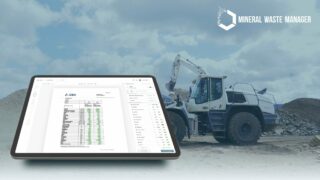
AI-Supported Analysis Processes

The waste-law classification of mineral waste is one of the most demanding tasks in demolition and construction projects. It determines early on which disposal routes are available, what costs arise and which liability issues may apply.

> Read More

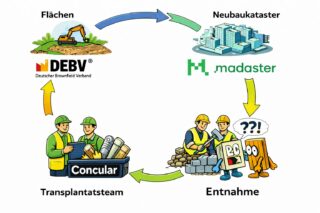
Making Money with Circular Dismantling

Circular dismantling works economically and in practice when everyone along the value chain collaborates — from the dismantling company to data and marketplace solutions, all the way to reuse in new construction.

> Read More

This year we celebrate:

Visit Us

Facebook

Instagram

Youtube

LinkedIn

  • Membership

  • Newsletter subscription

ASSOCIATION

  • About us
  • Profile and history of the association
  • Members Directory
  • Membership
  • Image brochure
  • Committees
  • Organisation Chart
  • Partners
  • Board of Directors
  • Offices
  • Contact / Arrival

PROFESSIONAL SUBJECTS

  • Demolition Technology
  • Safety and Health protection at the workplace
  • Law
  • Recycling and Waste Disposal
  • Pollutants
  • Social policy and Collective agreement
  • Blasting Technology

PUBLICATIONS

    SEMINARS

      PRESS AREA

      • Association-News
      • Member-News
      • Press Archive
      • Download Press Images
      • Press Contact

      DATES

        Deutscher Abbruchverband e.V.
        • Imprint
        • Privacy Policy
        • Contact / Arrival
        Copyright 2026 Deutscher Abbruchverband e.V.